

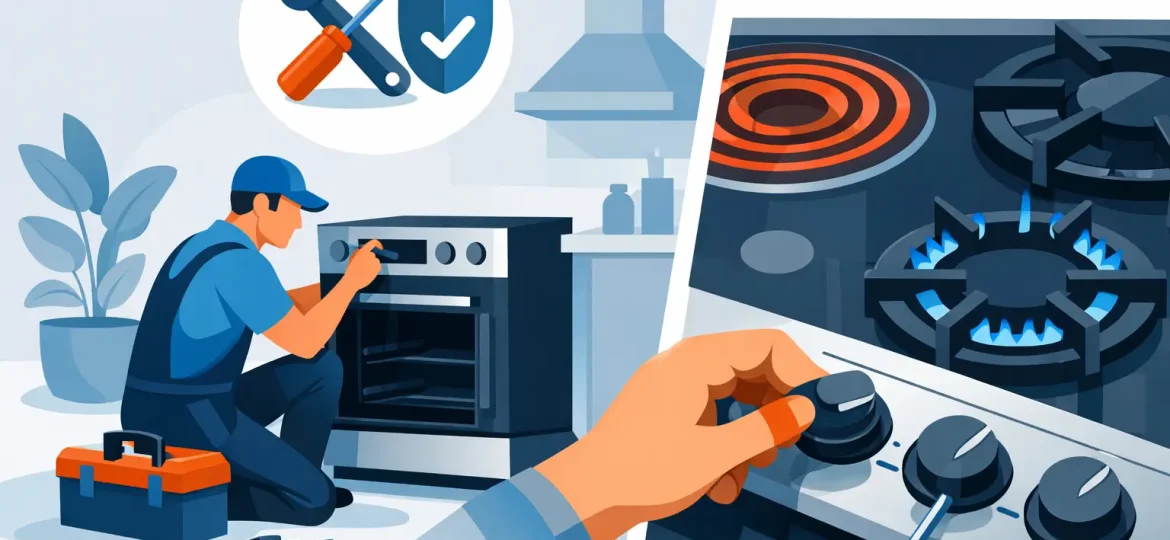
Dinner plans usually change fast when a burner stops heating, the igniter keeps clicking, or the cooktop shuts off mid-meal. That is when professional stove and cooktop repair matters most. For busy households in Los Angeles and the Valley, a broken cooking appliance is not a minor inconvenience. It can throw off school nights, meal prep, and the entire rhythm of the home.
Some problems start small. One burner takes longer than usual. A gas flame looks weak or uneven. The control knob feels loose. Other issues are harder to ignore, like a cracked glass cooktop, a burner that will not turn off, or a gas smell near the range. In every case, the real question is the same: is this something worth fixing, and how quickly can it be handled correctly?
When stove and cooktop repair should not wait
A stove or cooktop rarely fails at a convenient time. Most homeowners put off service for a few days, hoping the issue will clear up on its own. Usually, it does not. In many cases, a delayed repair turns a manageable part replacement into a more expensive problem.
Gas units deserve especially quick attention. If ignition is inconsistent, flames burn yellow instead of blue, or you smell gas around the appliance, service should be scheduled right away. Electric cooktops bring a different set of risks. A burner that overheats, cycles unpredictably, or stays on after the control is turned down can create a serious safety issue.
Even problems that seem minor can point to failing switches, damaged wiring, worn igniters, faulty spark modules, or burner elements near the end of their service life. A proper diagnosis matters because symptoms often overlap. What looks like a bad burner may actually be a control issue. What seems like a power problem may trace back to an internal connection or failed component.
Common signs your cooktop or stove needs service
Most service calls start with one of a handful of complaints. Burners that do not heat evenly are common on both gas and electric models. On gas appliances, that can mean clogged ports, ignition trouble, or valve issues. On electric units, it may be a worn surface element, damaged receptacle, or failing switch.
Clicking igniters are another frequent problem. Sometimes the burner lights eventually. Sometimes it keeps clicking after ignition. Moisture, food buildup, a bad spark switch, or a failing ignition system can all cause that behavior. It depends on the brand, the age of the unit, and whether the issue affects one burner or several.
Temperature inconsistency is also common, especially on older stoves. If one burner runs too hot while another struggles to boil water, the appliance is not performing the way it should. For households that cook daily, that inconsistency gets frustrating fast.
Then there are the problems that clearly call for expert attention: burners that will not turn on, knobs that do not respond properly, tripped breakers when the cooktop is used, visible sparks, broken glass, and gas odor. Those are not wait-and-see situations.
Why accurate stove and cooktop repair matters
Homeowners are often told they need a full replacement before anyone takes the time to diagnose the appliance properly. Sometimes replacement is the better move, especially if the unit is older, the part is obsolete, or multiple major components are failing at once. But not every repair call ends there.
A professional repair should start with identifying the exact failed part and checking for any related damage. That saves time and avoids replacing parts that are still working. It also helps protect premium appliances, where guessing can get expensive quickly.
This is especially important with higher-end brands. A luxury cooktop or slide-in range may use specialized ignition systems, controls, or custom-fit components. The repair approach is not always the same as it is for a standard builder-grade model. Experience with multiple brands matters because the symptoms may look familiar while the actual fix is brand-specific.
For homeowners, the benefit is simple: fewer repeat visits, less downtime, and more confidence that the appliance will work the way it should after service is complete.
Gas vs. electric cooktop problems
Gas and electric appliances can both be repaired, but the path is different.
Gas cooktops and stoves often develop issues with igniters, spark switches, burner heads, valves, and gas flow. Grease and food debris can interfere with ignition, but not every clicking burner is just dirty. If the burner cap is positioned correctly and the issue continues, the cause may be electrical rather than mechanical.
Electric models commonly deal with failed radiant elements, infinite switches, wiring damage, and sensor-related faults. On smooth glass cooktops, impact cracks are one issue, but internal heating failures are another. Some repairs are straightforward. Others depend on whether parts are still available and whether the damage extends beyond the visible surface.
Induction cooktops add another layer. They are efficient and precise, but they rely on electronic components that need the right diagnosis. If an induction zone will not detect cookware or shuts off unexpectedly, the issue may involve the control board, sensor system, or power supply. These are not appliances for trial-and-error repair.
What to expect from a service visit
When you schedule repair, speed matters, but so does clarity. A good service experience should feel straightforward from the start. The technician should inspect the appliance, confirm the symptom, identify the failed component, and explain the repair options in plain terms.
That matters because not every customer is deciding between repair and replacement in the same way. If the stove is relatively new, repair is often the obvious choice. If the cooktop is older and has already needed several repairs, the conversation changes. Cost, part availability, appliance condition, and expected lifespan all matter.
The best service calls are the ones where you are not left guessing. You should know what is wrong, what it takes to fix it, and whether the repair makes financial sense before work begins.
For many homeowners, same-day service is a major factor. When the kitchen is out of commission, waiting a week for diagnosis is rarely practical. Fast scheduling, honest pricing, and warranty-backed work make a real difference when the problem affects daily life.
Repair or replace? It depends on the appliance
There is no one-size-fits-all answer. A quality cooktop with a failed igniter or burner switch is often worth repairing. A newer gas range with one bad valve or ignition component usually is too. On the other hand, if an older unit has multiple electrical failures, visible damage, and hard-to-source parts, replacement may be the better investment.
The brand also matters. Higher-end appliances often justify repair because replacement costs are much higher. That said, premium brands can also involve pricier parts, so the decision still comes down to condition and value.
What homeowners usually want is a straight answer, not a sales pitch. That is why diagnosis comes first. The goal is to restore safe, dependable cooking service without wasting time or money.
Local service makes a difference
In a market like Los Angeles, homeowners have plenty of repair options, but not all service is equal. Local coverage matters when you need fast scheduling in places like Sherman Oaks, Encino, Studio City, Glendale, Pasadena, Beverly Hills, Santa Monica, and throughout the San Fernando Valley.
A local company that handles stove and cooktop repair every day is more likely to understand the urgency, carry common parts, and work across a wide range of brands. That includes standard household models and premium names found in many area homes. Speed helps, but experience is what keeps the repair from turning into multiple appointments and more disruption.
World Appliance Service Co is built around that kind of response: quick scheduling, clear communication, and repairs backed by real service standards homeowners can trust.
Choosing the right stove and cooktop repair company
When your appliance stops working, the lowest price is not always the lowest total cost. Poor diagnosis, repeat visits, and temporary fixes can end up costing more than getting the job done right the first time.
Look for a company that works on your brand, explains the problem clearly, offers a warranty on labor, and can respond quickly. If the service call is waived with repair, that helps reduce hesitation. So does knowing the technician is there to solve the problem, not push unnecessary replacement.
A good repair should leave you with a stove or cooktop that works safely, heats properly, and fits back into your routine without more stress. When cooking stops, the whole house feels it. Getting the right help quickly is what puts things back on track.
