

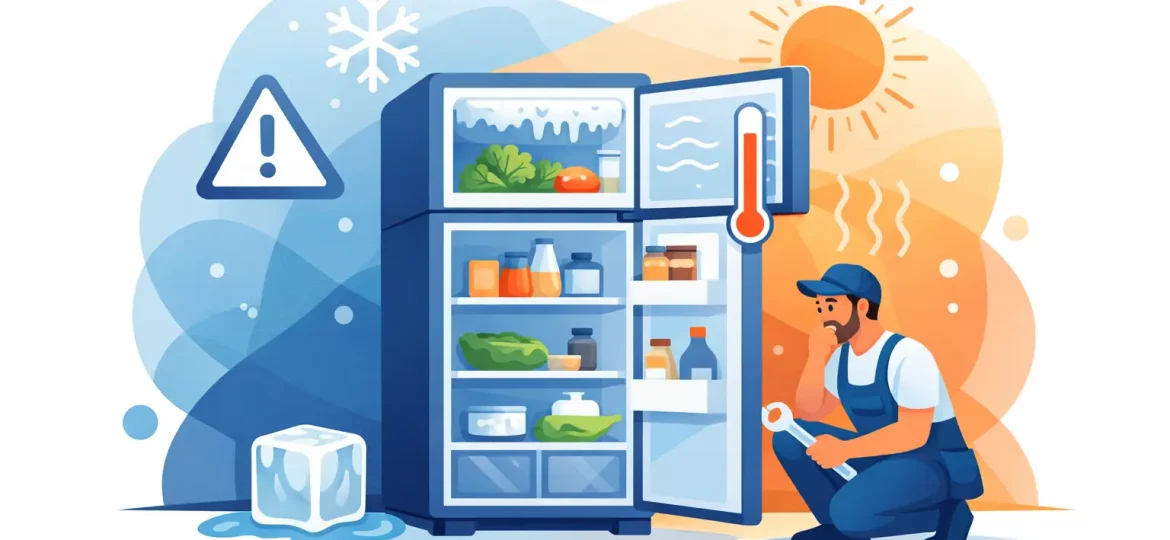
You notice it when the milk is not as cold, the leftovers feel warm, or the freezer starts turning solid food soft around the edges. When homeowners ask, why is refrigerator not cooling, they usually need a real answer fast – not a long DIY project and not a guess. A refrigerator that stops cooling can go from minor issue to spoiled groceries and water damage in a hurry.
Why is refrigerator not cooling in the first place?
A refrigerator cools by moving heat out of the cabinet, not by simply blowing cold air around. That means several parts have to work together at the same time. If one component fails, airflow gets blocked, the temperature control stops responding, or the sealed system loses performance, the entire unit can start warming up.
Sometimes the problem is simple, like a dirty condenser coil or a door that is not sealing all the way. Other times, the issue is more technical, such as a failed evaporator fan motor, bad start relay, faulty thermostat, control board problem, or sealed system trouble. The symptoms may look similar from the outside, which is why refrigerator diagnosis is often less straightforward than it seems.
The most common reasons a refrigerator stops cooling
One of the first things technicians check is airflow. If the evaporator fan is not moving cold air from the freezer into the fresh food section, the refrigerator side may get warm even while the freezer still seems somewhat cold. In side-by-side and French door models, this is especially common. Homeowners often assume the entire appliance has failed, but in many cases the issue is tied to one fan, one sensor, or a frost buildup problem.
Condenser coils are another frequent cause. When coils are covered in dust, pet hair, or kitchen debris, the refrigerator cannot release heat efficiently. The compressor has to work harder, cooling performance drops, and the unit may run longer than normal. In Los Angeles homes, where refrigerators often sit in warm kitchens and stay in constant use, dirty coils can make a noticeable difference.
A bad condenser fan motor can create a similar result. Even if the compressor is trying to do its job, the heat around the unit does not dissipate the way it should. That leads to poor cooling and, over time, added stress on more expensive components.
Then there is the compressor start system. If the start relay fails, the compressor may click, struggle to turn on, or shut off shortly after trying to start. To a homeowner, the refrigerator just feels warm. To a technician, that symptom points to a more specific electrical or mechanical issue.
Temperature control problems also matter. Some refrigerators use mechanical thermostats, while newer models depend on control boards, thermistors, and sensors. If those parts send incorrect information, the unit may not cool properly even though other components are still operational.
When the freezer is cold but the fridge is warm
This is one of the most common service calls because it feels confusing. If the freezer still seems cold, many people wonder how the refrigerator section can be failing at the same time.
In most designs, the freezer produces the cold air and a fan circulates part of that air into the refrigerator compartment. If the damper is stuck, the evaporator fan is weak, or frost has built up around the evaporator cover, the fresh food section warms first. That does not always mean the refrigerator is beyond repair. It often means there is a defrost issue, fan problem, or airflow restriction that needs proper diagnosis.
The trade-off is timing. A problem that starts as reduced airflow can become more serious if the compressor keeps running nonstop to make up for lost cooling. What begins as a manageable repair can turn into heavier wear on the whole system.
Why is refrigerator not cooling after making noises?
Unusual sounds often narrow down the source of the problem. Clicking can point to a start relay or compressor issue. Buzzing may suggest a struggling motor or electrical component. A loud humming fan, grinding noise, or repeated stop-and-start cycle can indicate a failing fan motor or ice obstruction.
Not every noise means the same thing. Some premium models sound different from standard units, and brands like Sub-Zero, Thermador, Bosch, and Jenn-Air have model-specific cooling systems that need the right diagnosis. That is where brand experience matters. Replacing the wrong part based on sound alone can waste time and money.
Frost, leaks, and warm temperatures often go together
If you see frost inside the freezer, water under the drawers, or condensation around the door gasket, those signs should not be ignored. A refrigerator may stop cooling because a defrost system is not working properly, the drain is clogged, or warm air is entering through a damaged seal.
A torn door gasket may sound minor, but it changes how the entire appliance operates. Warm air gets in, moisture builds up, frost develops in the wrong places, and the refrigerator has to run harder than it should. In busy households where doors are opened often, a sealing issue can show up quickly.
Leaks and frost are not always separate problems from cooling loss. They are often part of the same chain reaction.
What a professional checks first
A proper refrigerator diagnosis is not just about whether the light turns on or the unit makes noise. A technician usually checks temperature performance, fan operation, frost pattern, compressor behavior, control response, coil condition, and electrical continuity across key components.
That matters because several different failures can create the same symptom. A refrigerator that is not cooling could have a bad thermostat, blocked airflow, failed fan motor, defrost failure, refrigerant issue, or a weak compressor. The repair cost and urgency can vary a lot depending on the cause.
This is also why quick internet advice has limits. Resetting power or adjusting temperature settings may help in a small number of cases, but if food is already warming up, waiting too long can lead to lost groceries and bigger repairs.
When repair makes sense and when it depends
Most refrigerator cooling problems are repairable, but the right decision depends on the age of the unit, the brand, the failed part, and the condition of the sealed system. If the issue is a fan motor, thermostat, relay, control, or defrost component, repair is often the practical choice. If the compressor or sealed system has failed, the decision may depend on the model and value of the appliance.
High-end built-in refrigerators and premium brands are often worth repairing because replacement cost is much higher. Standard top-freezer or basic side-by-side models require a more balanced cost comparison. A trustworthy technician should be able to explain that clearly without pushing you either way.
For many households, speed matters just as much as price. A refrigerator problem interrupts daily life immediately. Families with full grocery loads, medications that need refrigeration, or limited time to wait around need the issue handled fast and correctly.
Why local service matters for refrigerator cooling problems
Refrigerator failures are rarely convenient. They happen on weeknights, before guests arrive, after a grocery run, or right when the house is already busy. Fast response can make the difference between saving food and throwing it out.
For homeowners across Los Angeles, the San Fernando Valley, Oxnard, and Ventura County, local service matters because the goal is not just diagnosis – it is getting the refrigerator cooling again without a drawn-out process. Same-day availability, experience with multiple brands, and warranty-backed work take a lot of stress out of the situation.
World Appliance Service Co understands that most customers calling about a refrigerator that is not cooling are not looking for a weekend project. They want a technician who shows up, finds the real cause, explains the repair clearly, and gets the kitchen back to normal as quickly as possible.
When to stop waiting and schedule service
If your refrigerator is running but not getting cold, the freezer is softening food, you hear repeated clicking, or you see frost and temperature swings, it is time to act. These are not symptoms that usually improve on their own.
Some cooling issues start small and stay affordable when caught early. Others become more expensive if the compressor is forced to run under strain or if food loss keeps piling up. The smart move is getting the problem diagnosed before the refrigerator quits completely.
A warm refrigerator never shows up at a good time, but the fix is often clearer than it looks once the right technician is in front of it. The sooner you address it, the better your chances of saving both the appliance and everything inside it.
