

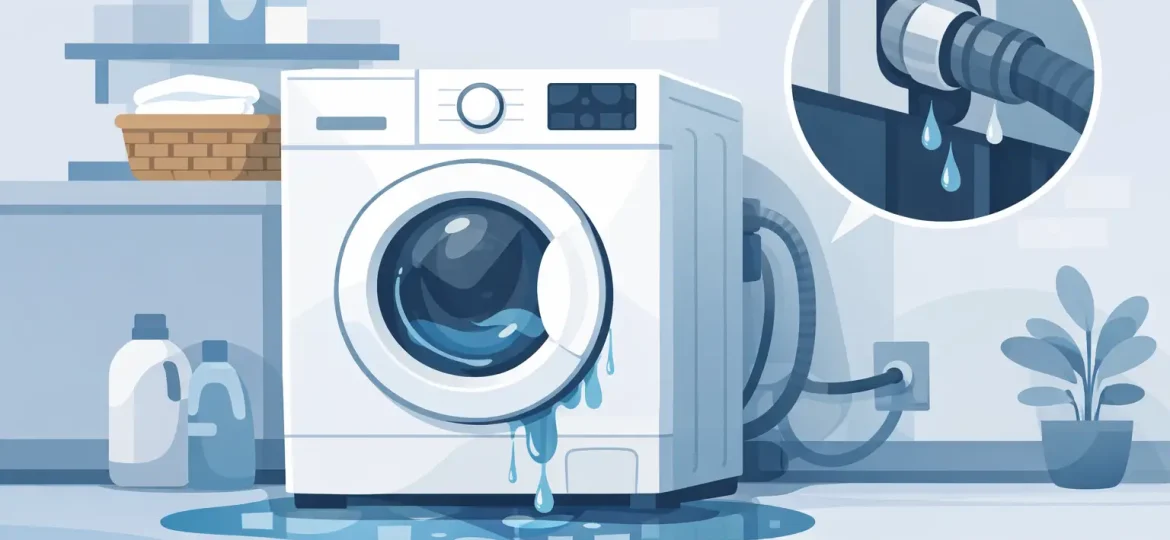
A washer leak usually shows up at the worst possible time – right before work, during a full family laundry day, or after you already started a load. If you are asking, why is washer leaking water, the short answer is that several different parts can cause it, and the location of the leak matters. Water under the front of the machine points to one problem, while water behind it or only during drain cycles points to another.
For most homeowners, the real issue is not identifying every internal part. It is figuring out whether the problem is minor, whether the machine is safe to use, and whether waiting will make the damage worse. In many cases, it will. A leaking washer can damage flooring, baseboards, drywall, and nearby cabinetry long before the appliance fully stops working.
Why is washer leaking water from different areas?
Where the water appears is often the best clue. If you see water behind the washer, the issue may involve the inlet hoses, the drain hose, or a loose connection at the wall. If water collects under the front on a front-load unit, the door boot, door seal, or detergent-related overflow may be involved. If the leak appears only when the tub drains or spins, the drain pump or internal hose could be the source.
Top-load and front-load machines also fail in different ways. A top-load washer may leak because of tub seal wear, an unbalanced load, or overfilling. A front-load washer is more likely to leak from the door gasket, dispenser, or a clogged drain system. Brand, age, and how often the machine is used all make a difference too.
The most common reasons a washer leaks
One of the most common causes is a damaged or loose water supply hose. These hoses bring hot and cold water into the machine, and over time they can crack, bulge, or loosen at the connection points. Even a slow drip can turn into a noticeable floor leak, especially during fill cycles.
Another frequent issue is the drain hose. If it is split, poorly secured, or pushed too far into the standpipe, water may back up or spill out while the washer drains. This can look like a major machine failure when the real cause is a hose placement problem.
The drain pump is another likely source. Pumps can crack, seals can wear out, and debris can damage the housing. When that happens, leaks often show up during wash or drain cycles and may seem to come from underneath the center of the washer.
On front-load models, the door boot deserves special attention. This rubber gasket creates a watertight seal around the door, but it can tear, warp, or trap small items like hairpins, coins, or fabric debris. If the seal is compromised, water may run down the front of the machine.
The detergent dispenser can also be the problem. Too much detergent, the wrong type of detergent, or buildup inside the dispenser can cause overflow. High-efficiency washers are especially sensitive to using non-HE detergent. What looks like a leak may actually be oversudsing forcing water and foam out of places they should not go.
Some leaks come from the tub seal or internal hoses. These parts are harder to inspect without disassembly, which is one reason a professional diagnosis matters. Internal leaks can be deceptive because the water may travel along the frame and show up somewhere far from the actual failing part.
Why the washer may leak only during certain cycles
If the machine leaks only while filling, the inlet hoses, water valve, or dispenser are likely suspects. If it leaks during agitation or washing, internal hoses or the tub area may be involved. If the leak appears during draining or spinning, the drain hose, drain pump, or standpipe connection becomes more likely.
This timing matters because it helps narrow down the repair quickly. A washer that leaks every time it fills is a different service call from one that only leaks at the end of the cycle. That is one reason experienced technicians often ask exactly when you see the water, not just where it ends up on the floor.
Sometimes it is not the washer itself
Homeowners are often surprised by this, but not every laundry room puddle comes from a failed washer part. A clogged standpipe, a backed-up household drain, or even condensation from nearby HVAC equipment can create similar symptoms. In upstairs laundry areas, water may travel before it becomes visible, which can make the source harder to identify.
That is also why guessing can get expensive. Replacing the wrong hose or continuing to run the machine without a proper diagnosis can lead to bigger water damage and a repair bill that grows beyond the appliance itself.
What to do when you notice a washer leak
The first priority is protecting your home. Stop the cycle, turn off the washer, and shut off the water supply valves if the leak is active or significant. If water is spreading, dry the area as much as possible to protect flooring and reduce the risk of slipping.
After that, avoid running another test load unless you know the source is something simple and external, such as a visibly loose hose connection. A machine that leaks once rarely fixes itself, and one more cycle can be enough to damage laminate flooring, seep into walls, or affect the ceiling below.
If the washer is stacked with a dryer, built into a tight laundry closet, or connected to premium-brand components, it is even more important not to force access or start disconnecting parts. Space constraints, electrical connections, and hidden water lines make laundry appliance leaks riskier than they first appear.
When repair makes more sense than waiting
A small leak tends to get treated like a small inconvenience. In reality, washer leaks are often early warning signs. A worn door boot may still hold for a few cycles before it tears further. A cracked hose may drip now and burst later. A weak pump seal may leak only during heavier loads until it fails more completely.
Prompt repair is usually the lower-cost option because it limits collateral damage. Floors, trim, drywall, and cabinets often cost more to repair than the washer issue that caused the leak. For busy households in Los Angeles, the bigger concern is disruption. Laundry piles up fast, and waiting days to address a leak usually means a bigger mess and more stress.
Why professional diagnosis matters
The question is not only why is washer leaking water, but why it is leaking now. Age, hard water, heavy usage, vibration, poor installation, and part wear all play a role. Two washers can leave the same puddle for completely different reasons.
That is where trained appliance repair helps. A proper diagnosis looks at the pattern of the leak, the model design, the condition of the hoses and pump, the dispenser behavior, the drain setup, and any related signs of wear. It saves time and reduces the chance of replacing one part while missing the actual cause.
For homeowners in Los Angeles, the San Fernando Valley, Oxnard, and Ventura County, speed matters too. A leaking washer is not a problem most people want to monitor for a week. It is something they want handled quickly, correctly, and with clear pricing.
A leaking washer is usually fixable
The good news is that many washer leaks can be repaired without replacing the machine. Hoses, pumps, door boots, inlet components, and drain-related parts are common service items. Even when the leak seems severe, the actual repair may be straightforward once the source is confirmed.
What matters most is acting before a manageable repair turns into a flooring claim. If your washer is leaking, stop using it and get it checked by a qualified technician. At World Appliance Service Co, we see this issue every day, and fast service makes all the difference when water is already on the floor.
A washer should make laundry easier, not put your home at risk. If something looks off, trust that instinct and handle it before the puddle gets bigger.
