

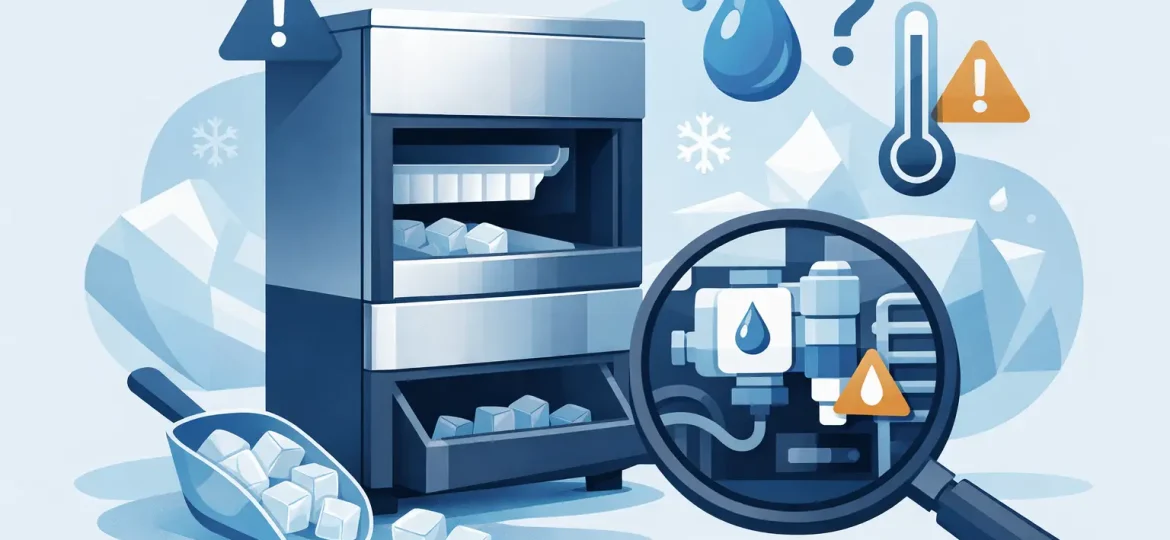
You usually notice it at the worst time – guests are coming over, the kids emptied the bin, or it is a hot Los Angeles afternoon and your refrigerator suddenly stops keeping up. If your ice maker not making ice has turned into a daily frustration, the real issue is rarely just “no ice.” It is often a sign that part of the refrigerator’s water, temperature, or control system is starting to fail.
For most homeowners, this is not a problem worth guessing through. Modern refrigerators and built-in ice makers are tied into multiple components, and the right fix depends on what failed first. A clogged water line, a bad inlet valve, a frozen fill tube, a faulty ice maker assembly, or even a temperature problem in the freezer can all lead to the same symptom. What looks simple on the surface can turn into wasted time, spoiled food, or a bigger repair if it is handled too late.
Why an ice maker not making ice is not always a minor problem
An ice maker is one of those features people do not think much about until it stops. But when it does, it can point to more than one system inside the refrigerator. Ice production depends on the freezer staying cold enough, the water supply flowing properly, the fill cycle working on time, and the control board communicating with the right parts.
That is why two homes can have the same complaint and need completely different repairs. In one kitchen, the issue may be a worn water inlet valve that no longer opens fully. In another, the freezer may be running warmer than it should because of a failing evaporator fan or a defrost problem. Premium brands can add another layer, since many built-in and counter-depth models use brand-specific parts and control systems that need experienced diagnosis.
If your refrigerator is otherwise cooling normally, that narrows the possibilities, but it does not eliminate them. If the freezer is also acting up, the ice issue is often just the first visible symptom.
The most common reasons an ice maker stops producing ice
In many service calls, the cause comes down to one of a handful of failures. The water supply line may be kinked, restricted, or partially clogged. The water filter may be overdue for replacement and limiting flow enough to affect ice production. The inlet valve may have weakened and stopped delivering the proper amount of water during each cycle.
Temperature is another major factor. Ice makers need a freezer that reaches and maintains the correct range. If the freezer temperature creeps up, even slightly, the ice maker may pause production or stop cycling altogether. Homeowners often notice this after seeing smaller cubes, hollow cubes, or very slow output before the unit stops making ice entirely.
There are also mechanical and electrical failures inside the ice maker assembly itself. Depending on the model, the mold thermostat, motor module, heater, control arm, or internal sensor can fail. Some units jam because of a cracked tray or frozen fill tube. Others appear dead because the control board is no longer sending the proper signal.
With refrigerators from brands like Sub-Zero, Thermador, Bosch, KitchenAid, Whirlpool, GE, Samsung, LG, and Jenn-Air, the symptom may be the same, but the repair path is not. That is one reason a quick visual check only goes so far.
What you can notice before scheduling service
There are a few signs that help explain what is happening, even if they do not identify the exact part. If the ice bin is empty but you can hear the ice maker trying to cycle, there may be a water delivery problem. If there are tiny cubes, clumped ice, or cubes stuck together, that can point to irregular fill levels or temperature fluctuations. If no water is dispensing from the refrigerator door either, the issue may involve the filter, supply line, or inlet valve rather than the ice maker assembly alone.
You may also see water leaking near the fill area, frost building around the ice maker compartment, or a sheet of ice forming where water is overfilling and freezing in the wrong place. In other cases, there are no obvious warning signs at all. The machine simply stops producing.
That is usually when homeowners start searching for a reset button or trying to force a cycle. Sometimes that works temporarily. Often it just delays the real repair.
When a reset helps – and when it does not
Some ice makers can be reset after a power interruption, filter change, or temporary jam. If the refrigerator recently lost power or the unit was turned off, a reset may restore normal operation. But if the problem keeps coming back, a reset is not a fix. It is just a restart.
This matters because recurring ice issues usually mean one of two things. Either a component is failing intermittently, or the refrigerator is dealing with an underlying cooling or water-flow problem that will continue getting worse. In both cases, waiting tends to make the repair more inconvenient and sometimes more expensive.
An ice maker that works one day and stops the next is especially worth checking sooner rather than later. Intermittent problems are common with failing valves, sensors, thermostats, and electronic controls.
Why professional diagnosis saves time
Homeowners call for service because they want the problem handled correctly, not because they want a list of possible causes. That is the real difference between internet troubleshooting and on-site diagnosis. A trained technician can test water flow, inspect fill tubes, verify freezer temperature, check continuity on failed components, and determine whether the issue is isolated to the ice maker or connected to a larger refrigerator problem.
That distinction matters. Replacing an ice maker assembly when the freezer is not cold enough will not solve the issue. Changing a water filter when the inlet valve has failed will not restore reliable ice production. And with higher-end refrigerators, incorrect part replacement can create delays, repeat visits, and unnecessary cost.
For busy households in Los Angeles, the San Fernando Valley, Oxnard, and Ventura County, speed matters too. A refrigerator problem interrupts daily life fast. Same-day service is not just a convenience – it can keep a smaller issue from turning into a more disruptive one.
Ice maker not making ice in built-in and premium refrigerators
Built-in refrigerators and premium models often need a more careful approach. These units may have separate ice maker modules, advanced sensors, and tighter temperature controls than standard refrigerators. They can also hide early warning signs better, so the ice maker stops before the owner notices any broader cooling issue.
That is common in high-end kitchens where the refrigerator still looks and sounds normal. The lights work. The display looks fine. The fresh food section seems cold enough. But the freezer is operating just outside the ideal range, or a control issue is preventing the harvest cycle from completing.
When that happens, brand familiarity matters. An experienced appliance repair company can recognize known failure patterns, source the correct parts, and avoid trial-and-error repairs. That is especially helpful with premium brands where delays are more frustrating and replacement parts are not always universal.
Repair or replace?
Most ice maker problems are repairable, and in many cases the repair is far more practical than replacing the refrigerator. A failed valve, motor module, sensor, control board, or ice maker assembly can often be replaced without major disruption. If the refrigerator is otherwise in good shape, repair usually makes sense.
There are exceptions. If the unit has widespread cooling problems, multiple failing components, or has reached an age where repairs are stacking up, replacement may be worth discussing. But for the typical service call, the issue is one failed part or one system problem that can be diagnosed and corrected.
That is why honest diagnosis matters. Homeowners want a clear answer on what failed, what it will take to fix it, and whether the repair is worth doing. They do not want vague maybes when they are already dealing with a broken appliance.
What to expect from service
A good service visit should feel straightforward. The technician should inspect the refrigerator, identify the source of the ice production failure, explain the repair in plain language, and let you know whether the issue is isolated or connected to overall cooling performance. From there, the goal is simple – restore reliable ice production without wasted time or unnecessary parts.
For families and working homeowners, that kind of clarity matters as much as the repair itself. You want to know if the problem is urgent, whether food storage is affected, and how quickly the refrigerator can be back to normal. If the service call is fast, transparent, and backed by warranty coverage, the whole situation becomes much easier to deal with.
At World Appliance Service Co, that is the standard homeowners expect when an appliance suddenly stops doing its job.
If your ice maker has gone quiet, the smartest move is not to wait for it to fix itself. A reliable refrigerator should make your day easier, and when it stops, getting the right diagnosis quickly is usually the fastest way back to normal.
